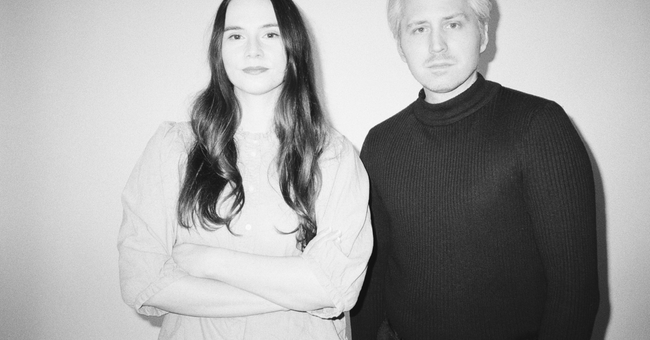
It’s done. It’s dead. | Victoria Halper & Kai Krösche | English Version
*Интервюто на български четем ТУК.
What happens to our digital lives when we are no longer here to maintain them?
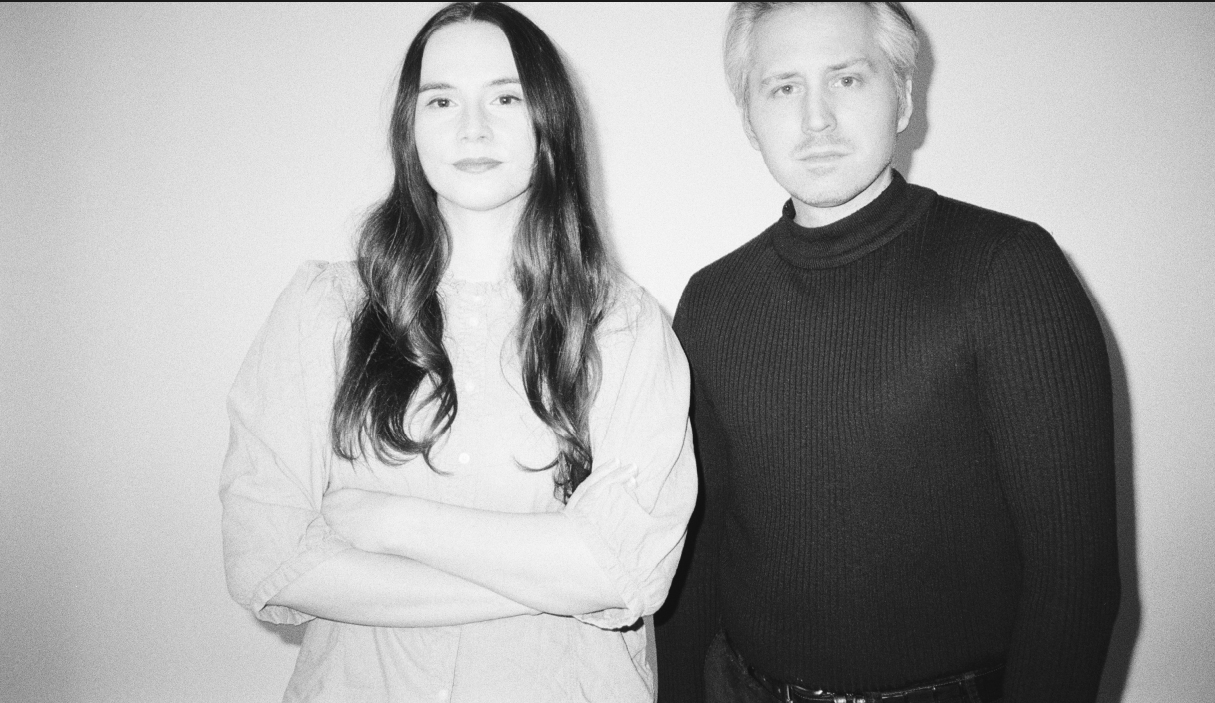
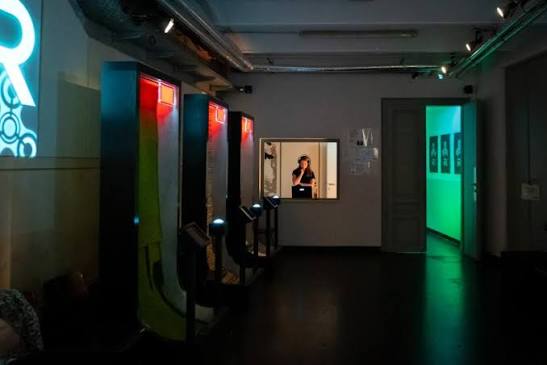
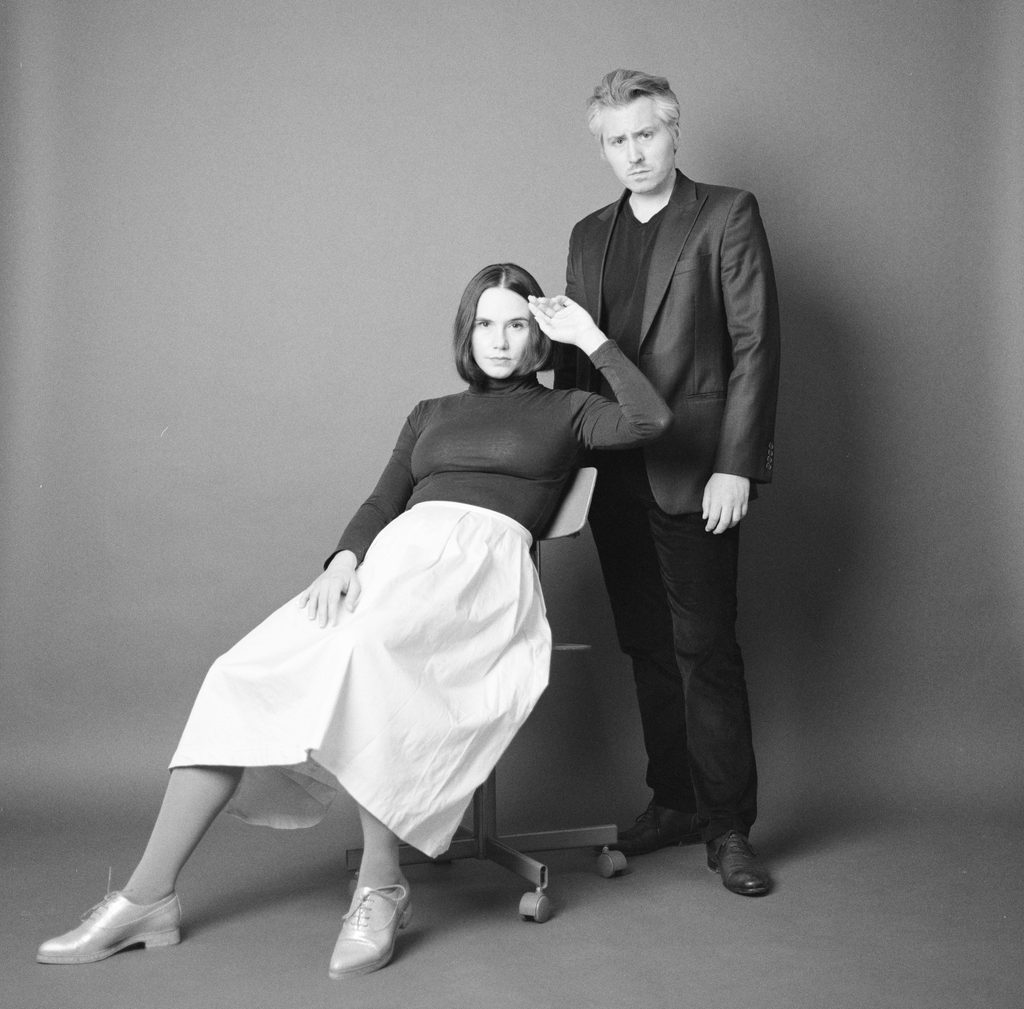
Victoria Halper and Kai Krösche of DARUM explore the question in [EOL]. End of Life, an immersive journey through the abandoned ruins of a fictional metaverse, where the audience gets to decide what should be preserved and what should be erased. Part theatre, part performance and part VR experience, the work turns questions about memory, death and technology into something you have to physically walk through.
After being selected among the ten most remarkable productions of 2024 by Theatertreffen, [EOL] arrives in Sofia as part of the international programme of the 16th ACT Festival for Free Theatre. We can experience it at Videnie between 17 and 20 October.
What does “end of life” mean to you in the context of this work — the death of a person, the disappearance of a digital world, or the end of a particular vision of the future?
Victoria: “End of Life” has several meanings in this production. It actually starts as a term from computer technology: when software no longer receives updates or support, it reaches its “end of life”. It may not disappear immediately, but sooner or later things stop working. It’s done. It’s dead. There’s something oddly uncompromising about that expression.
Kai: But of course there’s also the question of when a human life is really over. Is it when the body dies, or only when a person’s ideas, memories and traces have disappeared? Those things don’t necessarily end at the same time, especially in the digital world. And in [EOL], an entire virtual universe is about to be switched off because a company considers it obsolete. One person’s outdated technology might still contain another person’s memories — or even their idea of the future.
Why did you want to place the audience in the position of making these decisions rather than simply witnessing them?
Victoria: We found it interesting to approach the subject from the perspective of a corporation. Most of us use social media, and we’ve all encountered the idea that platforms have their own policies — whether we’ve read the terms and conditions or simply heard about them in the news. In [EOL], the audience becomes an outsourced freelancer who has to decide which digital worlds are worth preserving and which should be deleted.
But you’re not really playing a character in the traditional sense. You remain yourself, faced with decisions that are much harder than the seemingly simple task suggests. This is something we’re interested in throughout our work: putting people in situations where they have to develop their own position towards what they’re experiencing. That doesn’t always require interaction. Here, though, you actually have to make a choice — and you can’t simply leave the responsibility to somebody else.
Do you think our digital identities can ever truly outlive us, or do they become something fundamentally different once we are gone?
Kai: Of course a digital identity can outlive the person it represents — we haven’t cracked the elixir of life, after all. But the copy and the original are two fundamentally different things. A digital figure might look like someone, speak like them or reproduce their gestures. That still doesn’t tell us what its relationship to that person really is.
What interests me is the moment when this copy starts having a kind of existence of its own. While we’re alive, we can change our minds, contradict things we said years ago or decide we no longer want to be represented in a certain way. Once we’re gone, the digital version can keep circulating or even generating new responses, but we can no longer correct it. In that sense, something outlives us — but it is no longer quite ours.
How important was physical movement to the dramaturgy, and what changes when the audience’s body becomes its own interface?
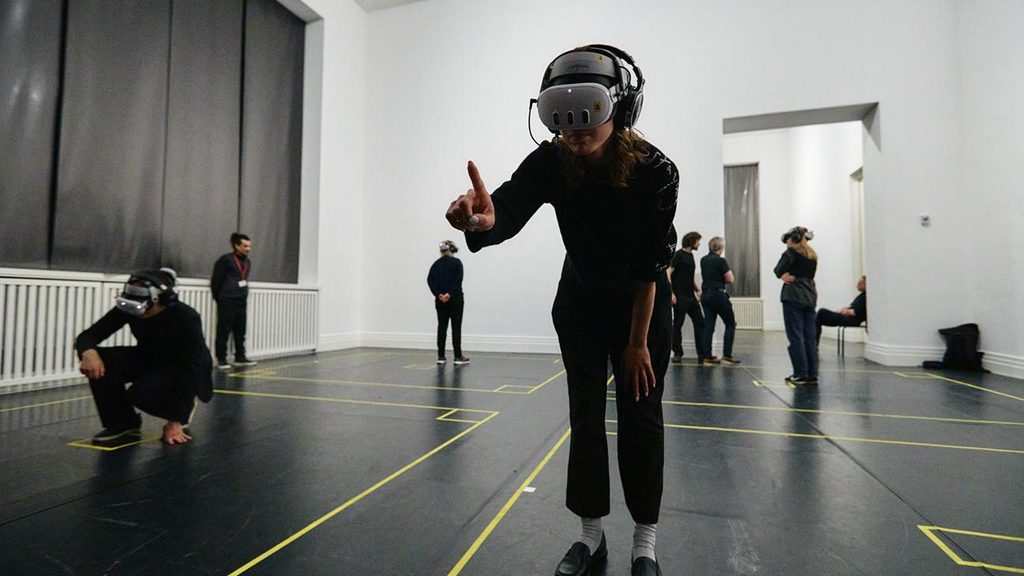
Victoria: It was extremely important that people actually search through these spaces themselves. There’s something voyeuristic about entering a place and looking at what somebody has left behind — and it appeals to a very natural curiosity. We wanted to make that curiosity physical rather than simply let people look around using a joystick, as they might in a computer game.
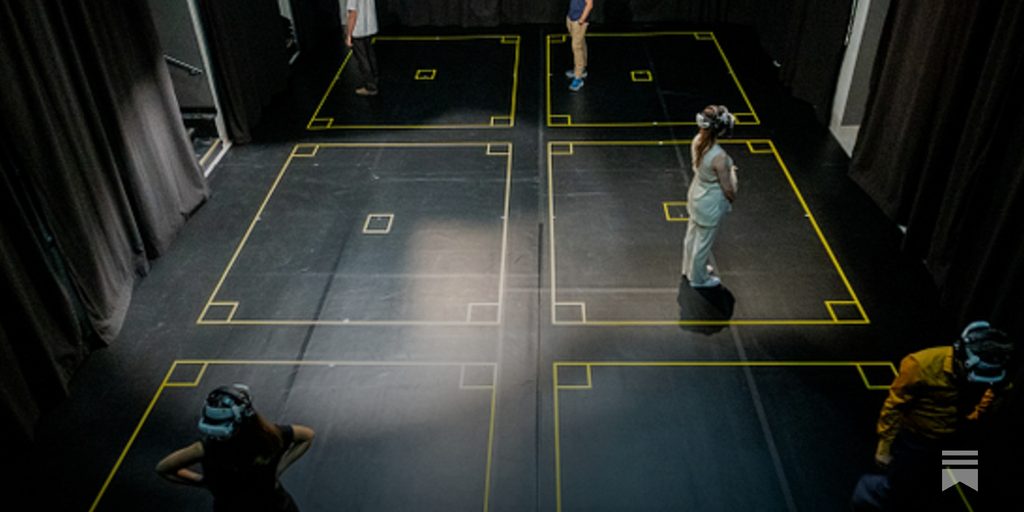
As in our immersive performances and installations, we want people to move, reach for things and remain aware of their own bodies in space and time. You might only walk a few metres in the real room, but feel as though you’ve travelled an enormous distance in the virtual world. That discrepancy allows us to play with scale and perception. And because your body is the interface, even a simple decision to step closer to something becomes part of the dramaturgy.
What happens to the traditional relationship between performer and spectator when the audience is immersed in a world that nobody else can see in quite the same way?
Kai: It creates a strange double perspective. In a conventional theatre, other people can see you watching a performance. In [EOL], you can also see people wearing headsets and moving around the same physical space — but you can’t really see what they’re seeing, imagining or experiencing inside their virtual world.
In fact, from the outside, someone in VR can suddenly look like a performer: reaching for something invisible, turning towards an unseen figure, stopping in front of a wall that isn’t there. So there’s a shared physical situation, but also an intensely individual experience that nobody else can witness in quite the same way. We found that relationship between being together and being alone particularly interesting.
Did working in VR change your understanding of what theatre is, or did it confirm that theatre has always been less about a physical stage than about creating a shared experience of reality?
Victoria: I don’t think VR fundamentally changed our understanding of theatre. We’ve always been interested in different forms of storytelling, and our work has moved between theatre, film and installation for years. We start with the subject and then look for the form that can do something interesting with it.
What makes VR unusual is that it combines things we associate with both theatre and film. The people and events you encounter have been recorded or programmed in advance, but you can still interact with them. Your senses experience something immediate, while your mind knows it’s artificial. We’re interested in that tension, rather than in deciding whether the result should be called theatre, installation or cinema. It doesn’t have to fit neatly into one category to be an interesting artistic experience.
Who should have the right to decide what happens to these traces after we die — the individual, their loved ones, or the platforms that store them?
Victoria: It’s difficult even to say which digital traces belong to whom. Ideally, people should be able to decide what happens to their own digital legacy, and if somebody inherits certain rights, those rights should mean something. But an email archive, for example, also contains other people’s words and private lives. And what happens when you’ve effectively signed parts of your digital life away by agreeing to a platform’s terms and conditions?
Ultimately, we need to decide as a society how to regulate this territory, not simply leave the rules to the companies storing our data. It almost sounds like a debate from the 1990s, and in some ways it is. We’ve been asking these questions for decades, but technology keeps developing faster than our answers to them.
Can digital preservation become a form of mourning, or does the promise of keeping someone digitally present risk making it harder to accept their absence?
Kai: I do think digital preservation can be very helpful in mourning. We’ve kept photographs and videos of people we love for more than a century. Then there are emails and messages — and now, potentially, chatbots trained on somebody’s digital traces. When we started developing [EOL], ChatGPT was only just emerging, but the idea of using someone’s personal data to simulate a conversation with them already existed. There are people who find comfort in these services, and companies offering them.
Victoria: My father died in 2017, and I’m glad I had access to a lot of his digital life, though not everything. Would I have wanted a chatbot of him? Would I have tried one if it had existed? Probably not. I don’t feel that I missed out by not having one, because I know it wouldn’t have been him. Personally, I feel that actual film footage of a person preserves more of their presence than a digital avatar does.
But I wouldn’t want to generalise from that. For somebody else, interacting with a digital version of a person might help them say goodbye and move on. Mourning is an incredibly individual process, and I don’t think there’s one correct way to go through it.
Victoria, how did you approach creating a sense of humanity in digital figures that represent people who are no longer there?
Victoria: The characters are based on real faces — or at least their skin textures come from real people. Often, we combine several people in one figure. To me, there’s a difference between a face that has actually existed and one that has been invented from scratch. It’s in small things, like the particular shape of a mouth or the bridge of the nose.
At the same time, we deliberately didn’t want hyperrealistic bodies. The characters had to feel human, but still like digital versions of people — the sort of appearance you might conceivably build for yourself in a virtual world. The Supervisor is actually modelled on my own head, with my face, skin and voice. But I changed her appearance slightly, because she’s a different character. She has something of me, without actually being me. That seemed quite fitting for [EOL].
Why did you choose to make the audience complicit in a corporate system rather than position them as outsiders criticizing it?
Kai: Because putting the audience outside the system, looking down on it critically, would be a rather comfortable position. Most of us already use these platforms and accept their rules. We know that corporations have policies, even if we rarely read them. In [EOL], the company has digital real estate to manage and an old product to shut down. It’s not necessarily acting out of cartoonish evil; it’s getting on with its business. What’s disturbing is how easily moral decisions become administrative ones.
Victoria: But we also wanted to leave the criticism open. There’s something genuinely beautiful about the worlds that these companies make possible, and about the ways people can connect and represent themselves within them. The problem isn’t simply that corporations are involved. It’s how they deal with their ethical responsibility towards the digital spaces they own — spaces that people may have filled with deeply personal meaning. We’re still figuring out how we want to live together in this new territory, and what rules should apply there.
11. Kai, how did the technical possibilities and limitations of VR shape the dramaturgy and emotional atmosphere of the work?
Kai: The technical conditions shaped an enormous amount of the piece. We developed [EOL] for standalone VR headsets, where every polygon, texture and real-time light uses up a limited budget of processing power. We could never simply build anything we imagined at unlimited resolution. But instead of hiding those restrictions, we made them part of the concept: our setting is an ageing metaverse full of very different, visibly artificial worlds. A slightly imperfect animation or a non-photorealistic figure isn’t necessarily a failure there. It can actually contribute to the feeling that you’re wandering through digital remains.
We also decided that the audience should use their hands rather than controllers and move by actually walking, rather than teleporting or steering themselves with a joystick. That sounds simple, but it meant designing every virtual space around the small physical area available to each person. And because there’s no live performer inside the VR who can improvise if somebody gets lost, we had to think through and program an enormous number of possible audience reactions. Even the audience guidance became part of the dramaturgy.
We used body and facial motion capture to create the figures, but there are no live-acted characters in the experience. What you meet has been recorded in advance, yet it can feel uncannily present. So an apparent limitation of VR became central to the atmosphere of [EOL]: you encounter figures that seem to be there with you, although what you’re actually meeting is a trace of something already gone.
At what point does preserving digital heritage become a business decision rather than a cultural or ethical responsibility?
Victoria: I’m not sure I’d separate a business decision from a cultural or ethical responsibility quite so neatly. So many things we consider new are really familiar ideas taking a different form. We used to have a Britannica Encyclopedia on the bookshelf, and now we click around on Wikipedia. The basic idea is the same; what has changed is how we access it.
In that sense, it makes perfect sense to me that the funeral industry would eventually offer services in the digital sphere as well. Some of these ideas come from people who have lost someone themselves and are looking for a way to deal with that loss. At some point, that can also become a business. The services cost money to develop and maintain, and somebody has to pay for them.
I would rather pay openly for a service I understand than have a company earn money in less visible ways through my personal data or my activity. At least then the relationship is more transparent. The ethical question isn’t whether money is involved at all, but what kind of dependence and responsibility comes with the service.
Did you want audiences to leave the experience feeling responsible for their decisions, or questioning the system that forced them to make those decisions in the first place?
Victoria: I don’t think we want to prescribe what the audience should feel. That’s quite fundamental to our work: we try to offer a lot of food for thought and room for emotion, without telling people what the right response should be.
It’s fascinating to see how differently people react. Sometimes their responses are surprisingly similar, which probably also says something about the questions and emotions we ourselves brought to the project. Other people come away with entirely different impressions, and that’s just as interesting. Someone might feel responsible for a decision; someone else might question the system that made them take it. Both can be true. We’d much rather leave that tension open than send everyone home with the same conclusion.
Може също да ти хареса